Column · @sergioaexd135
Spring, TX Start Strong: Condition 1 Combat Center martial arts
Walk into a good martial arts academy and you feel it before you see it. Footwork on the mats. Gloves snapping against pads. Coaches speaking clear, calm cues while students focus. At Condition 1 Combat Center in Spring, TX, that feeling is immediate. The school has built a reputation for practical self defense, thoughtful coaching, and a culture that welcomes beginners without watering down standards. If you are searching for real training with real results, this is where to start strong and stay consistent.
What “start strong” looks like in practice
Starting strong does not mean crushing yourself in week one. It means showing up with a plan, understanding the training arc, and pairing ambition with patience. At Condition 1 Combat Center, the early emphasis sits on foundations you can reproduce under stress: distance, timing, posture, grip fighting, guard retention, base, and angle management. In stand up, you will learn to move your head and feet before loading power into strikes. In grappling, you will keep your hips under you and your elbows close, then add transitions, then pressure. This sequencing comes from years on the mats, not from a trend. The progress is steady because it is layered.
I have seen new students arrive worried they will slow down the room. You do not. Good rooms lift new people to the standard. A coach can watch a jab and in a few words change your balance for the better. A training partner can notice your grip fading and remind you to re-pummel before you get tired. That is how a beginner finishes the first month with sharp movement and fewer wasted reps.
Who trains here, and why it works
The student body is a mix. Parents bring their kids to build confidence that shows up at school as better focus. Nurses and teachers come for self defense classes that feel honest, not theatrical. Former athletes arrive to find structured competition again. There are also people who never thought of themselves as “fighters,” who simply want to be stronger and safer. This range helps everyone. Advanced students learn to explain and control. New students have examples in every direction.
At condition1combat.com you will see options for self defense classes and martial arts classes tailored to both kids and adults. Names vary over time, but the consistent thread is live practice with safety systems that let you push without guesswork. That balance matters more than any label on a schedule.
A realistic path for kids: discipline without dread
Kids need clear rules, quick feedback, and visible milestones. The Condition 1 Combat Center kids martial arts program checks all three. Classes move fast, but not chaotically. Warm ups involve basic tumbling and coordination, because balance and body awareness cut across all styles. Drills have purpose: stance work that prevents tripping over their own feet, hand-fighting games that teach frames and distance, and partner drills that show how to create space without panic.
Belts or stripes only help if they reflect genuine skill. In kids martial arts at Condition 1 Combat Center, promotions track real progress. A child who can shrimp with intent, break fall cleanly, keep hands up under light pressure, and explain two ways to get to a coach if something feels wrong, is learning the right lessons. Across a semester, you can expect to see better posture, steadier eye contact, and more patient listening. Parents often mention better sleep, because movement calms busy minds.
The other benefit feels small, yet carries weight: kids learn to lose and try again. Sparring and positional games create outcomes. Sometimes your child ends up on bottom, stuck, frustrated. Coaches frame that moment as a problem to solve, not a failure. That mindset transfers to schoolwork and friendships.
Adults, pressure, and practical self defense
Most adults show up with a history. Maybe a nagging shoulder. Maybe a half-finished attempt to get fit on a treadmill. Condition 1 Combat Center adult martial arts training handles that reality without excuses. In striking classes you will work footwork, defense first, then power. Bag rounds build conditioning without beating up your joints. In grappling, you will learn to carry your weight with your frame, not your shoulders, and to breathe while you fight for position.
Self defense classes at condition1combat.com focus on the skill set that often decides real encounters: awareness, boundary setting, footwork, and the first two seconds of contact. That might be snapping a jab to create space, managing a collar tie so you do not give up your neck, or learning how to post off a wall without exposing your ribs. Scenario work is moderated, not macho. You will never be asked to be reckless. You will be taught to solve the problem in front of you and then leave.
I have seen the trade-offs debated for years. Do you drill one system deeply or mix disciplines? The truth is context driven. For broad self protection, you need competence in three lanes: hands and feet at range, clinch and wall, and ground engagement with stand ups. Condition 1 Combat Center builds those lanes in parallel. That keeps training honest. If you only box, the first tie-up can feel foreign. If you only grapple, you can forget how to close safely. When integrated well, each session reinforces the others.
First 30 days: what to expect when you show up
- A detailed walk-through of rules, safety, and how classes flow, so you know what to do when rounds start.
- Technical baselines, such as a balanced stance, a jab with head movement, a basic pummel sequence, and two reliable escapes.
- Progressive contact, beginning with drills on bags and pads, then controlled partner work with clear intensity caps.
- Feedback loops, including quick coach check-ins and simple goals for the next session.
- Recovery guidance, like how to stretch your hips and shoulders, how to hydrate, and how to pace attendance.
Thirty days is enough to build a habit and feel the early results, not enough to master anything. If you keep notes on what felt easy and what resisted you, the second month becomes targeted. You will stop guessing and start planning sessions. That is how plateaus get shorter and fewer.
Safety is a skill, not a promise
A safe room is engineered. Coaches set intensity, structure partner pairings, and model restraint. Students learn to tap early and often, to reset when fingers wander near eyes, and to spot when a round has tipped from learning to ego. At Condition 1 Combat Center, these norms are explicit. You will see mouthguards and hand wraps in striking, clean mats and consistent hand hygiene, and a culture where asking a question mid-round signals focus, not weakness.
Injury avoidance is also mechanical. Keep your chin tucked during sprawls. Pivot your rear foot on crosses, do not twist your knee. Frame with the heel of your palm, not your fingers. Hug elbows to ribs when you feel lost on the ground. These are small habits that pay off across hundreds of reps. A coach who reminds you to shake out your hands between mitt rounds is thinking about your wrists on week twelve, not just the pad noise in the moment.
How the curriculum builds real skill
Condition 1 Combat Center martial arts classes usually run on a cycle: fundamental blocks that return every few weeks, layered with situational modules. That pattern lets new students revisit the base while advanced students go a level deeper. For example, a “jab month” might include:
- beginners: stance, jab mechanics, defensive hand after jab, moving off centerline
- intermediates: double jab entries, jab to body with angle change, countering parries
- advanced: jab into clinch, jab feints to draw slips, southpaw adjustments
Grappling follows a similar arc. One cycle might focus on guard retention and stand ups. Another might target top control with pressure principles, knee cuts, and crossface management. You will hear coaching cues that translate across positions: win the inside space, never sacrifice posture for speed, hunt grips before you move your hips. When instructions echo in different contexts, retention jumps.
What sets the culture apart
Plenty of schools say they have a family feel. The litmus test is how beginners are treated on tough days. I have watched a coach stop a round, walk a new student through a wall pin step by step, then reset the room to give that student a fair second attempt. That small piece of time cost the class thirty seconds and bought that student the confidence to return. You cannot fake that priority.
Accountability runs both ways. Show up late, you hustle through a safe warm up and slide in without drama, but you also learn to plan better. Tell a partner your shoulder feels crunchy that day, and they will adjust grips without complaint. Skip too many rounds to avoid tough partners, and a coach will notice and nudge you forward. These are adult agreements that keep standards high without posturing.
Kids progress you can actually measure
Parents want to see change. At kids martial arts Condition 1 Combat Center, measurement looks like more than a new stripe. Track whether your child can:
- demonstrate a proper break fall on both sides without pausing
- maintain a steady stance while moving backward and side to side
- keep hands high and eyes forward while shadowboxing for one minute
- explain three respectful ways to decline unsafe contact at school
- hold a plank with a straight line from ear to ankle for twenty seconds
Improvements combat center on these markers show real coordination, awareness, and control, skills that correlate with better outcomes on and off the mat. Coaches often share narrow goals after class so parents can reinforce practice at home for five quiet minutes, a win for busy schedules.
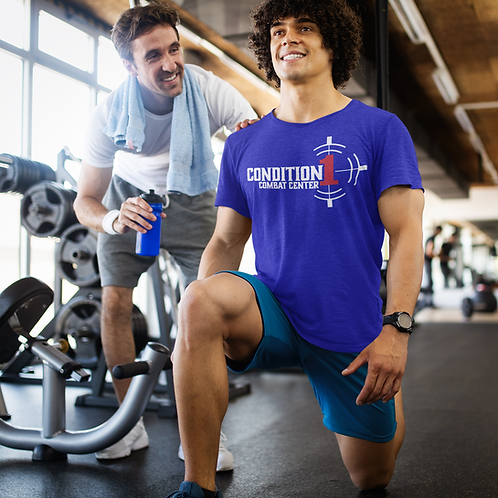
Strength and conditioning, aligned with skills
Condition 1 Combat Center adults quickly learn the difference between fitness for its own sake and conditioning that serves technique. You will not chase random soreness. You will build qualities that make rounds better: repeatable power, grip endurance, trunk stability, and aerobic capacity that does not vanish after two hard exchanges.
Expect simple, effective tools. Kettlebells for hinge patterns and rotational strength that improves hooks and sprawls. Slam balls and med balls to connect hips to hands. Pulling work for neck and upper back to protect posture in clinch and grappling. A bike or rower for intervals that teach you to recover, not just suffer. If you keep your weekly split at three to four sessions, with at least one purely technical day and one mixed-conditioning day, progress compounds without cooking your nervous system.
The role of sparring and live rounds
There is no substitute for timing against a resisting partner. But live work needs guardrails. Beginners at Condition 1 Combat Center learn positional sparring first. Start in a dominant or defensive position, work a narrow set of goals, then reset quickly. That format gives you dozens of decision points without the noise of a full round. Striking sparring begins with controlled touch, focused on accuracy, distance, and defense. Heavy sparring can be valuable for experienced athletes preparing for competition, but it is not a rite of passage.
Look for coaches who scale contact by intent, not by ego. Telling two experienced partners to pick it up when both are moving cleanly is different from asking a new student to stand and bang to “toughen up.” The former prepares. The latter injures and discourages.
Pricing transparency and value
Families weigh cost against results. While specific numbers change, the value equation stays steady. You are paying for coaching expertise, a safe and clean facility, a community that helps you show up, and a curriculum that wastes no time. If you train three days a week, that might be 12 to 14 sessions per month. Break down your tuition by session, and you often find that a single class costs less than dinner out, with the added benefit of better sleep and lower stress.
If budget is tight, ask about family plans, military or first responder discounts, and options to pause during travel. Schools like Condition 1 Combat Center that plan for long relationships usually have fair solutions.
Competition paths without pressure
Not everyone wants to compete. You can train for skill, health, and confidence and never step onto a platform or into a ring. That said, competition offers a clean mirror. If you decide to try a grappling tournament or a smokers-style in-house striking event, coaches will build a short camp. Volume goes up slightly, strategy narrows, and recovery gets scheduled, not guessed. You will run situational drills that mirror the event’s rules and pace. Win or lose, you will learn the difference between practice timing and event timing, a lesson that then improves every future round.
How to choose the right class mix
The site condition1combat.com lists schedules for self defense classes, striking, grappling, and mixed sessions. When in doubt, start with two fundamentals classes and one mixed class each week for a month. If you feel more confident on your feet than on the ground, flip a grappling session into your week. If your gas tank drops in minute two, keep technique sessions but add a short, sustainable conditioning block after class once or twice a week. Avoid hopping programs every seven days. Give a plan at least four weeks before you judge it.
Ask a coach to look at your week. A five minute conversation often saves you five weeks of trial and error. You will leave with a simple roadmap and a couple of checkpoints.
The difference honest self defense makes
The phrase “self defense” gets stretched. Condition 1 Combat Center self defense classes keep it honest by anchoring scenarios in probability, not fantasy. Most altercations start with words, distance violations, and hands reaching. You learn verbal boundaries that sound like you, not a script. You practice moving your feet while you speak, so you are not rooted. You feel what a collar tie does to your posture and how to break it. You learn to use walls as tools, not traps. If a situation collapses to the ground, you have a plan for frames, hip movement, and getting up without giving your back.
Women’s self defense seminars and ongoing classes often include additional context: bag carries to simulate moving a child, situational drills around vehicles, and clothing considerations. There is nothing performative about it, and no shame in avoiding risk. The goal is escape, not dominance.
A note on recovery and longevity
Students who stay in the game share one habit: they respect recovery. Sleep, hydration, and light movement on off days matter. Keep your neck and hips mobile. Use a lacrosse ball for two minutes on your feet and forearms after heavy grappling. If your hands swell after mitts, check your wraps and glove fit, not your pain tolerance. A set of long exhale breaths after class reduces nervous system load and improves sleep that night.
Coaches at Condition 1 Combat Center often cue small recovery rituals. Wipe down, rehydrate, stretch one hip flexor, then one pec, then write a quick note about what you learned. That 10 minute routine turns a single class into progress you can measure.
What returning students say after six months
Patterns emerge. People mention changing how they carry themselves in parking lots. Parents talk about kids volunteering for chores without being asked twice. Weight loss shows up as a side effect, not the main event. Joints ache less, because movement regains alignment. Social circles shift toward people who encourage good habits. These are not guaranteed outcomes, but they are common when training is consistent and aligned with clear coaching.
Getting started without overthinking it
If you are considering martial arts classes at Condition 1 Combat Center, keep the entry simple. Visit condition1combat.com, check the schedule, and pick a fundamentals session. Show up 15 minutes early, tell the front desk about any injuries, and ask a coach where to place your bag and how to wrap your hands if you are striking. Stay curious, not proud. Ask your partner what pace feels right. Tap when something pinches. Smile more than you scowl. Do that for a month and you will know if the room fits you.
Why Spring, TX benefits from this kind of training room
Spring sits close enough to Houston to feel the city’s speed, but it keeps a neighborhood cadence. People know each other. Word of mouth matters. A small business like Condition 1 Combat Center survives by delivering real value day after day, not by chasing fads. That discipline shows up in clean mats, organized classes, and a staff that remembers names. The school becomes a third place, not home and not work, where effort has meaning and results stack up.
For families, kids programs offer structure and a peer group built around respect, not screens. For adults, self defense training paired with fitness anchors the week. For everyone, the culture rewards humility and consistency, two qualities that carry well beyond the mats.
Quick answers to common questions
Parking and timing vary by day, so give yourself a buffer for evening classes. Wear breathable athletic clothing to your first session. If you own a mouthguard, bring it. For grappling, trim nails and remove jewelry. You do not need top-tier gear on day one. The gym can advise on gloves, shin guards, or a gi if your path includes it, and condition1combat.com lists recommended options that fit the curriculum.
If you are worried about fitness levels, start with shorter rounds and extend rests. Coaches would rather see you twice a week for a year than five times in a week followed by a month off. If injury history makes you hesitant, share specifics. A competent coach will adapt drills without isolating you.
A short plan you can follow now
- Commit to two fundamentals classes and one optional mixed or conditioning session for four weeks.
- Keep a small notebook. After each class, write two wins and one focus for next time.
- Ask one question per class, even a small one. Questions drive retention.
- Prioritize sleep on training nights. Screens down early, hydration up.
- After week two, schedule a coach check-in to calibrate pace and goals.
Start there. The first gains come from showing up, staying safe, and letting good coaching do its work. Spring, TX has a resource in Condition 1 Combat Center martial arts, and if you use it with a steady plan, you will feel the difference in how you move, how you think under pressure, and how you carry yourself the rest of the week.
For schedules, introductory offers, and details on kids and adult programs, visit condition1combat.com. Whether you are leaning toward self defense classes, a focused striking or grappling path, or a full mix, you will find an on-ramp that respects where you are and points you toward where you want to go.